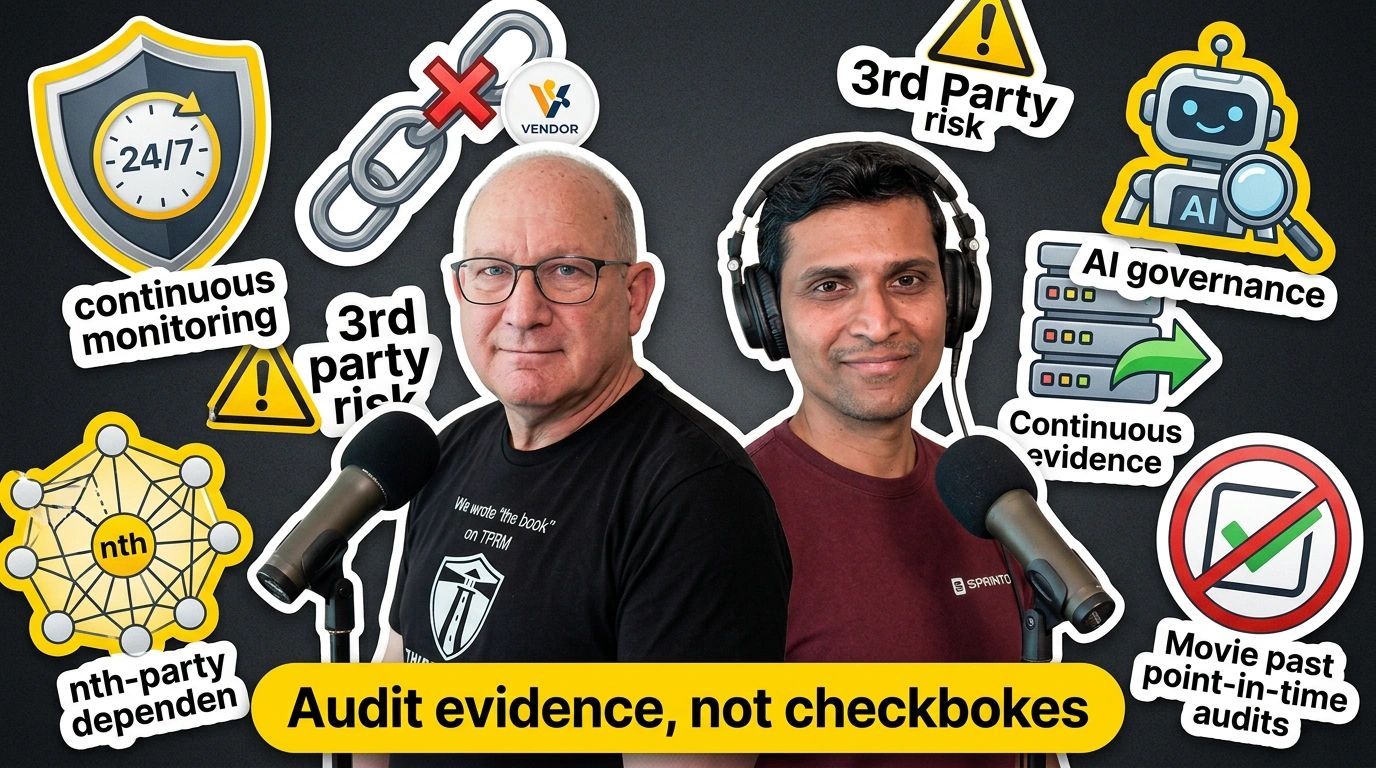
AI expands third-party risk because it changes the unit of governance from “vendor” to “capability with keys.” AI agents can see data, make decisions, and take actions, often with privileged credentials and little lifecycle control. A simple governance model starts with four questions: what can it see, what can it do, who can stop it, and can we reconstruct what it did through audit logs. For nth-party risk, full mapping is often a fantasy that creates operational friction and goes stale immediately. Focus instead on concentration risk and critical choke points: where sensitive data goes, where privileged access flows, and what downstream failures could stop a critical service. For ROI, boards respond to outcomes like time to know about an incident and time to revoke access, plus measurable reductions in risk and hours returned to the business through automation.
Check out the full podcast here: https://www.buzzsprout.com/2120821/episodes/19683175
From Third Party Threat Hunting™ (TPTH™)
Put it to work
Which of your vendors are critical?
The free eight-step vendor checklist: sort your vendors into systemically critical, critical or ordinary.
Get the checklist →Privileged access
The free VAULTS™ training: 31 minutes on privileged access review, with a worked review.
Get the free training →