Knowledge Network · Oct 7, 2026
Podcast Outtake: Why Frameworks are important for AI Risk
Frameworks help because they give teams shared language and a repeatable yardstick. Common references like the OWASP Top 10 for LLM Applications and Cloud Security Alliance guidance help establish taxonomy, but they are ...
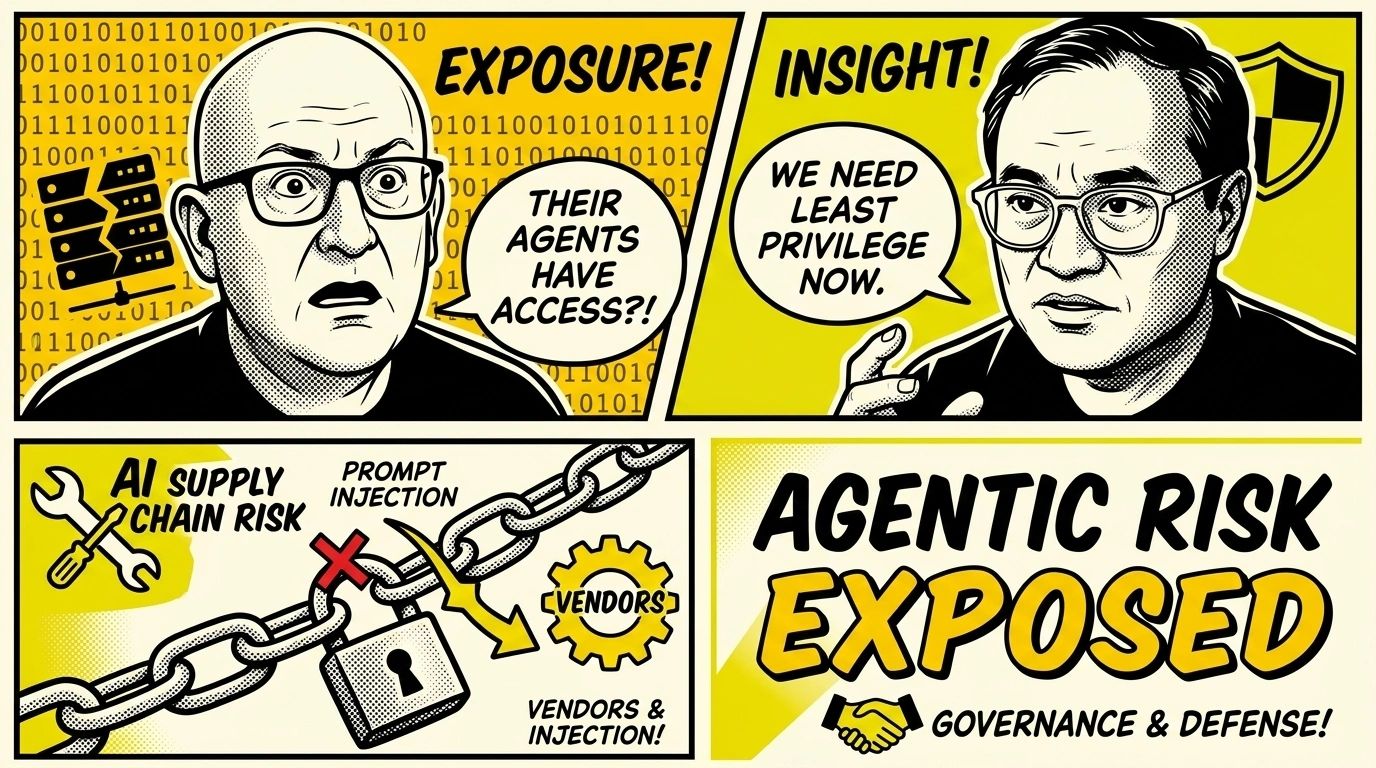
For practitioners, the near-term playbook is straightforward but not easy: extend your existing security program instead of starting over. Apply zero trust principles, enforce least privilege, and define agent identity as a blended concept tied to intent and scoped permissions. Demand better vendor answers by asking layer-by-layer questions: which foundation model is used, what data sources feed RAG, what agent framework runs the workflow, how authentication and identity pass-through works, where it is deployed, how it is evaluated for drift, and what observability you can integrate. Pair that with technical controls such as AI endpoint detection and response and monitoring for anomalous tool execution. As models accelerate vulnerability discovery and even remediation, AI risk management must evolve from annual questionnaires to continuous monitoring that matches the pace of the AI supply chain.
Check out the full podcast: https://www.buzzsprout.com/2120821/episodes/19718679
From Third Party Threat Hunting™ (TPTH™)
Put it to work
Vendor AI risk
The free BEACON™ class: 19 minutes on the six categories of vendor AI risk, with a real case to work through.
Take the free class →Privileged access
The free VAULTS™ training: 31 minutes on privileged access review, with a worked review.
Get the free training →