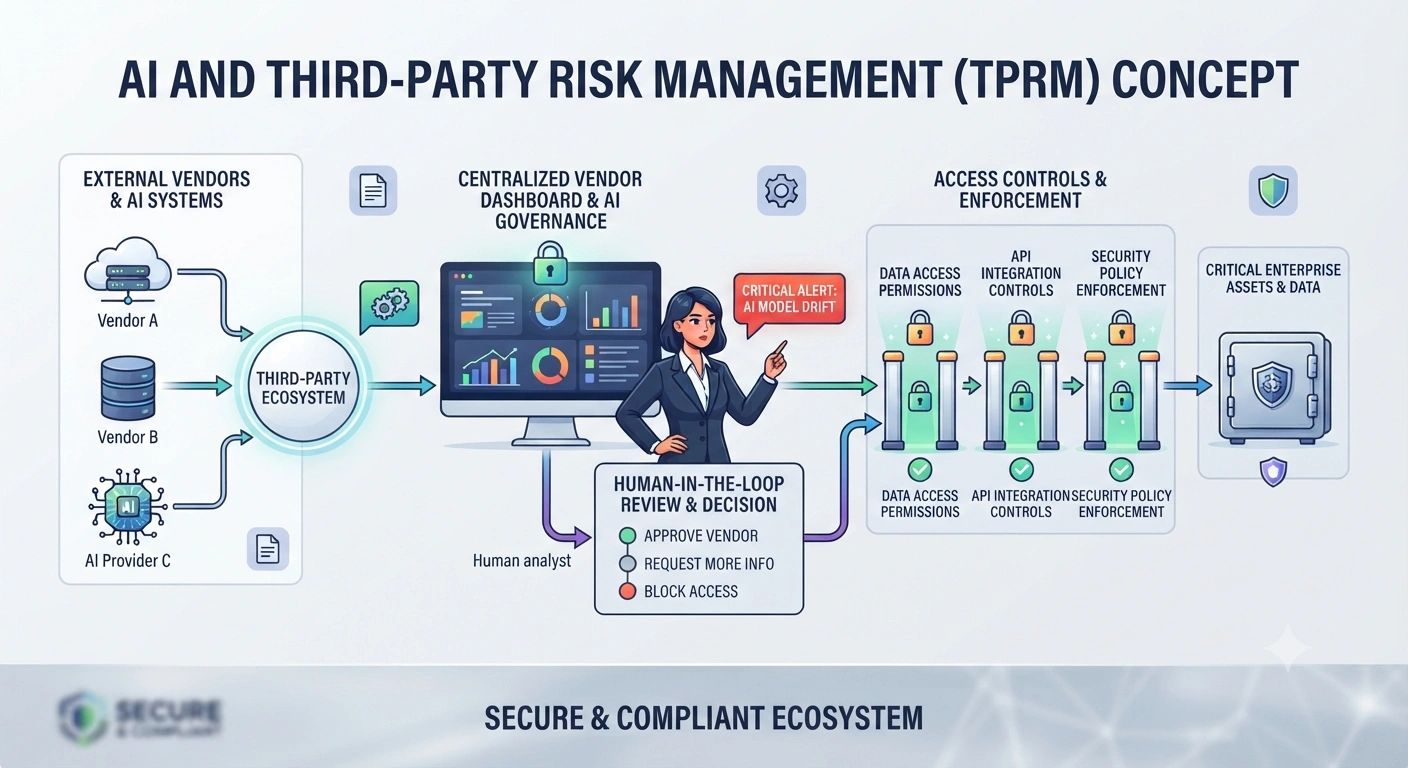
The best advice from the conversation was also the simplest.Do not get hypnotized by AI.Go back to the fundamentals and ask the questions that always matter:
- What access does this vendor or agent have?
- What data does it handle?
- What dependencies does it create?
- What would happen if it failed?
- What is truly business-critical?
Once you answer those, prioritization becomes much easier. You stop wasting time on low-value tasks and start focusing on the exposures that could actually hurt your business.That also means accepting that not every process needs to be fully automated. Some things will always require human judgment, especially when business context matters. AI may help narrow the field, but humans still need to make the call.That’s not a weakness in the system. It’s a strength.
Frequently Asked Questions
What is the biggest risk of using AI in third-party risk management?The biggest risk is using AI to speed up a broken process. If your current workflow is mostly checkbox compliance, AI will make it faster without making it better.Will AI replace human vendor reviewers?Not really. AI can help with prioritization, pattern recognition, and evidence collection, but humans still need to understand the business context and make the final decisions.Why are point-in-time assessments becoming less useful?Because modern environments change constantly. Vendors, permissions, integrations, and data flows shift too often for an annual snapshot to be fully reliable.What should third-party risk teams focus on first?Start with access, data, and dependencies. Those three areas reveal a lot about inherent risk and business impact.How can vendors make security reviews easier?By sharing verifiable, current evidence about foundational controls and reducing reliance on manual screenshots or static questionnaires.Third-party risk is moving from static reviews to continuous visibility, and AI is speeding up that shift. But the core lesson is the same as it’s always been: if you want to reduce risk, you have to understand access, data, and dependencies first. From there, AI becomes a tool for prioritization - not a replacement for judgment. For more on this topic, check out our podcast: https://thirdpartythreathunters.buzzsprout.com