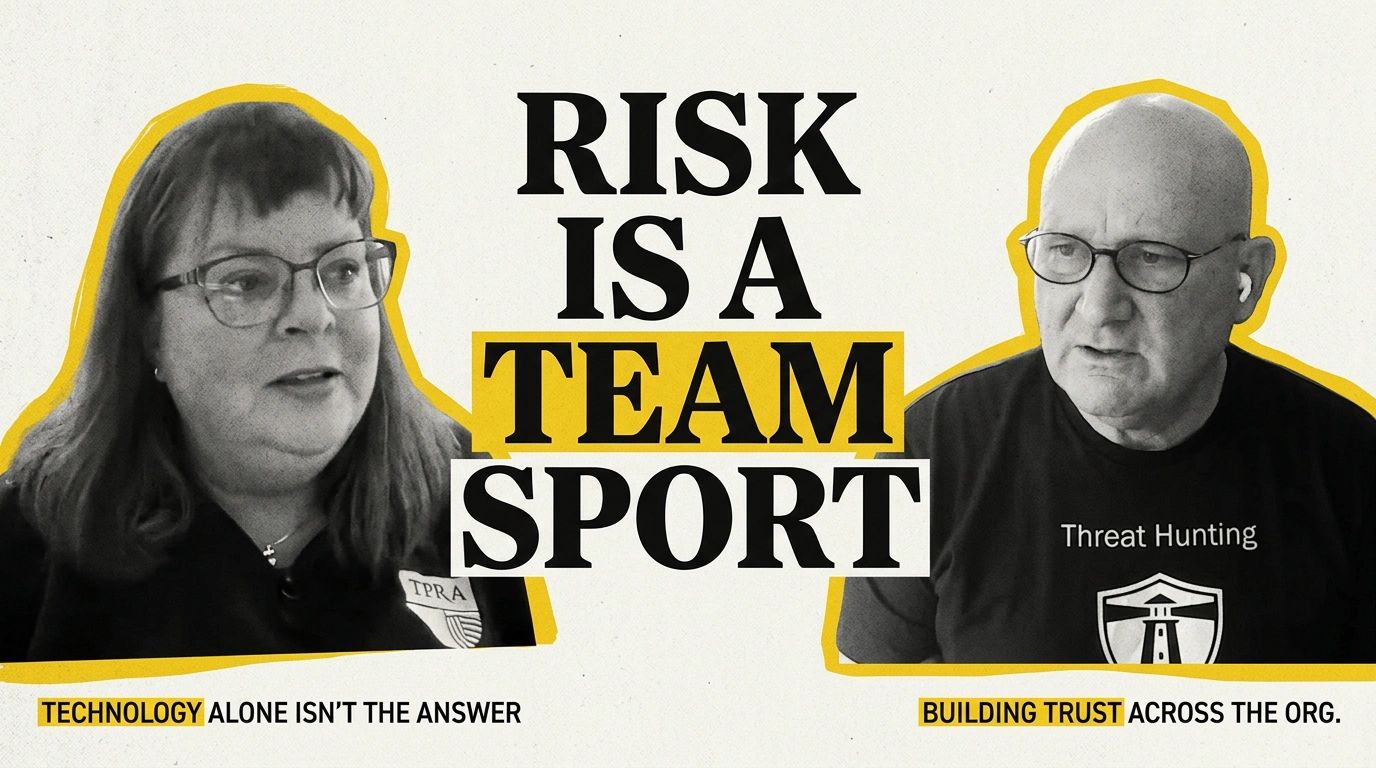
Every year, enterprise security teams invest heavily in shiny new GRC platforms, continuous risk monitoring feeds, and AI-powered questionnaire automation. Yet, when a critical third-party vendor experiences a breach or operational outage, teams still end up scrambling in spreadsheets and direct message threads.
Why? Because technology doesn't fix third-party risk—relationships do.
In a recent episode of the Third Party Threat Hunters podcast, Heather Kadavy, Director of Membership Success at the Third Party Risk Association (TPRA) and a 34-year operational risk veteran, pointed out a truth many security leaders overlook: vendor risk programs fail not because of flawed software, but because nobody in the organization trusts or understands the program.
The First Line of Defense is Your True Detection Engine
When TPRM is treated as a isolated security silo, business units view risk assessments as a bureaucratical tax. Sales, procurement, and department heads want to onboard tools quickly to drive revenue or operational efficiency. If security feels like a brick wall, business units will bypass the process—leading to unvetted "shadow IT" and unmonitored AI tools.
To build a resilient program, TPRM practitioners must act as risk translators and educators, not compliance cops:
- Speak the Business Unit’s Language: Instead of overwhelming internal stakeholders with technical jargon, frame risk in terms of operational disruption, financial loss, and project timelines.
- Explain the "Why" Behind the "How": When business owners understand why a fourth-party dependency or SOC 2 review matters, they become active partners in monitoring vendor behavior rather than passive form-submitters.
- Build Individual Bridges: System workflows can send notifications, but they can't establish trust. One-on-one collaboration with department leads transforms them into an extension of your risk team.
From Box-Checking to Dynamic Collaboration
A software platform is merely an repository. Real risk mitigation happens in the dialogue between security teams, procurement, and first-line business owners.
Before investing in your next TPRM tool upgrade, ask your team: Have we built the internal relationships needed to act when the tool flags a problem?
Watch or listen to the full episode with Heather Kadavy on *YouTube**.*
From Third Party Threat Hunting™ (TPTH™)
Put it to work
Which of your vendors are critical?
The free eight-step vendor checklist: sort your vendors into systemically critical, critical or ordinary.
Get the checklist →Ready for the exam?
The free exam and audit readiness scorecard: eight questions to ask yourself before an examiner or auditor does.
Get the scorecard →