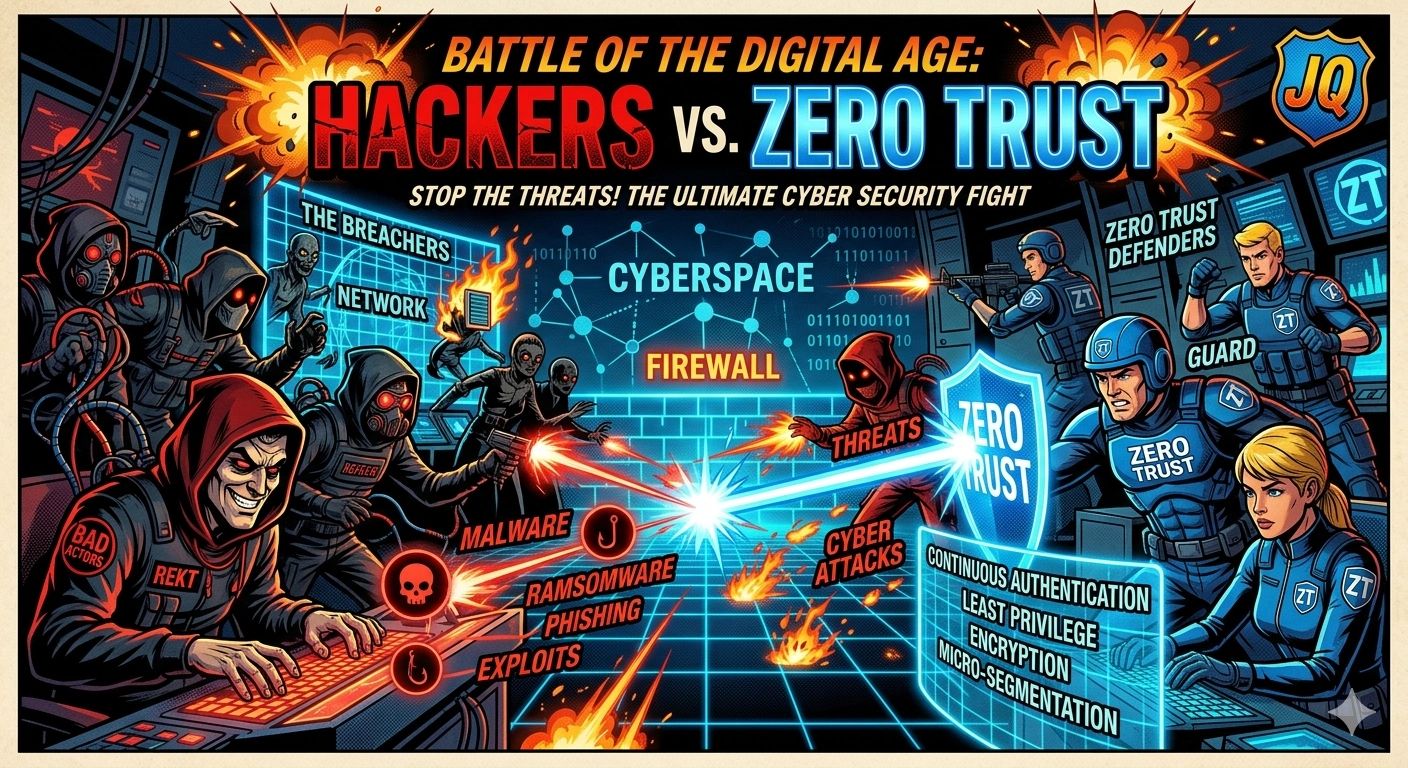
Zero Trust and Third-Party Risk Management might seem like separate disciplines. One is an internal security architecture strategy; the other is about managing external vendor relationships. But they are, in fact, natural complements, and combining them produces dramatically better risk outcomes than either approach alone.
The Alignment Is Structural
Zero Trust's core principles map almost perfectly onto the requirements of a mature cyber third-party risk program:
• ZT assumes breach → CTPR assumes vendor breach is inevitable
• ZT enforces least-privilege → CTPR limits vendor access to only what's needed
• ZT secures all communications regardless of location → CTPR protects data flowing to/from vendors anywhere
• ZT requires per-session authentication → CTPR demands strong auth for all vendor access
• ZT enables continuous monitoring → CTPR tracks vendor risk between assessments
The ZT/CTPR OSI Model
To make this combination actionable, a practical framework maps the intersection as a 3×4 matrix:
• Rows (Resource Types): Third-Party Users | Third-Party Applications | Third-Party Infrastructure
• Columns (Activity Types): Identity | Device/Workload | Access | Transaction
This gives teams 12 specific "cells" to work through, each with clear objectives and controls. The model is deliberately flexible: teams can work row by row (all controls for users first, then applications, then infrastructure), column by column (identity controls across all resource types first), or in a "tic-tac-toe" pattern prioritized by risk.
Why Start with Third-Party Risk?
Zero Trust is a journey, and many organizations struggle to know where to begin. Third-party risk offers an ideal starting point for three reasons:
- It's finite and bounded. Third parties are a defined population, easily narrowed by applying risk criteria. 2. It's high-impact. Vendors represent one of the highest concentrations of external risk. 3. It's measurable. Success is concrete: you can track which vendors have been assessed, which controls have been implemented, and how risk scores change over time.
Key Takeaway: Zero Trust and Third-Party Risk are not just compatible: they're synergistic. The ZT/CTPR OSI Model gives organizations a practical, modular way to apply Zero Trust principles specifically to their vendor ecosystem, starting wherever their risk is greatest.
Tags: Zero Trust | Third-Party Risk | Strategy | OSI Model | Risk Reduction
From Third Party Threat Hunting™ (TPTH™)
Put it to work
Which of your vendors are critical?
The free eight-step vendor checklist: sort your vendors into systemically critical, critical or ordinary.
Get the checklist →Privileged access
The free VAULTS™ training: 31 minutes on privileged access review, with a worked review.
Get the free training →